Flannery O’Connor and the Southern Gothic Lens
Savannah has not only become a tourist destination, but it’s a living archive of stories. With its moss-draped oaks, cobblestone streets, and haunted mansions that whisper of a past both beautiful and brutal. As a Georgia-based English major with a passion for literature and history, I’ve long been drawn to the ways place shapes narrative. While Savannah’s literary identity isn’t exactly a mystery, it’s layered. I want to explore how its rich history has shaped storytelling and continues to inspire the voices that emerge from its streets. This will be a three-part blog series that investigates how the city’s historical landscape inspires storytelling through three distinct lenses: Flannery O’Connor’s Southern Gothic fiction, the oral traditions of the Gullah Geechee people, and the theatrical spectacle of Midnight in the Garden of Good and Evil.
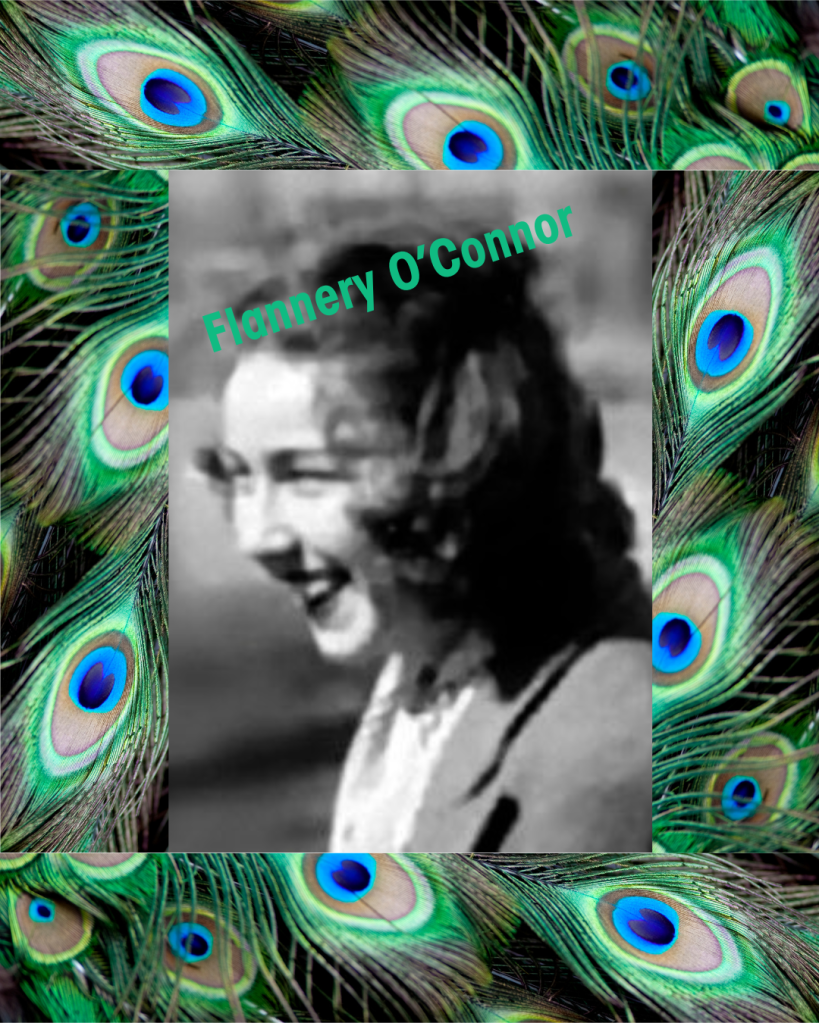
Image of Flannery O’Connor by cmacauley, used under CC BY 3.0. All images include descriptive alt text for screen readers and accessibility.
Southern Roots and Literary Reckonings
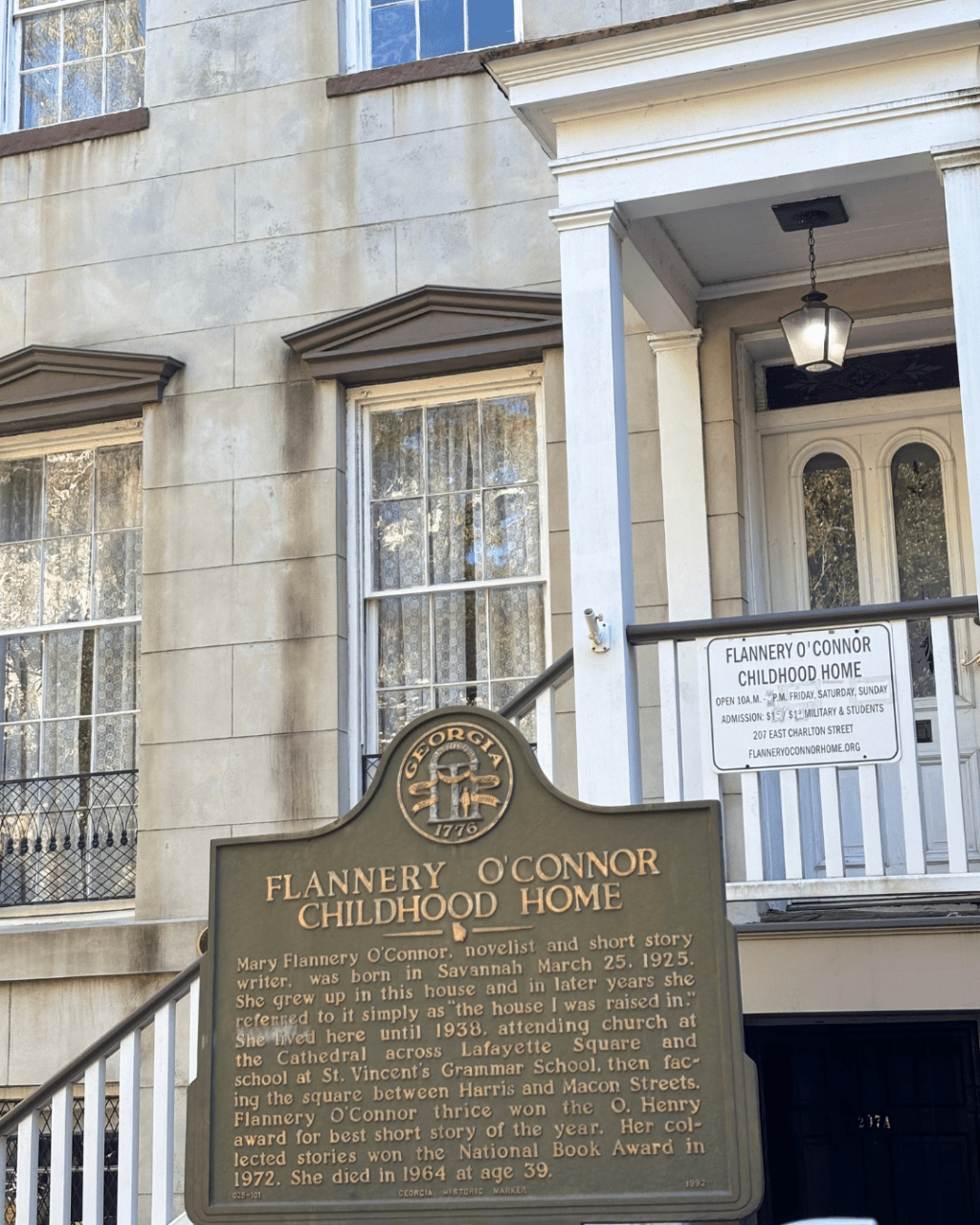
Flannery O’Connor was born in Savannah, Georgia, in 1925, and remained there until age thirteen, when her family moved to Milledgeville due to her father’s worsening illness. Raised Catholic in the segregated South, O’Connor witnessed racial injustice and social contradictions firsthand. Experiences that shaped the moral and spiritual tensions in her writing.
At Andalusia Farm, her home in Milledgeville, O’Connor raised over forty peacocks, drawn to their strange beauty and biblical symbolism. These birds, both literal and metaphorical, echo through her work as emblems of mystery, grace, and divine absurdity. Step inside the quiet halls of Andalusia through Matt & Kelli’s lens. A video tour that brings O’Connor’s world to life.
While she is best known for her short stories, rich with grotesque and spiritual reckoning, this post focuses on her novel, Wise Blood, which offers a deeper, more sustained exploration of those same themes within a Southern Gothic framework.
Wise Blood: A Southern Gothic Lens on Belief and Belonging
Wise Blood explores spiritual crisis through Hazel Motes, who creates a “Church Without Christ” in protest of the false piety he sees around him. His disgust isn’t atheism; it’s a tortured search for truth in a world that feels spiritually hollow. O’Connor, a devout Catholic, believed grace often arrives through grotesque means, and Hazel’s journey reflects that belief.
Savannah’s historical landscape, with its decaying mansions and shadowed cemeteries, mirrors this tension. The city’s beauty is haunted; its history layered with contradictions. Churches like the Cathedral Basilica of St. John the Baptist stand as a spiritual beacon, while nearby folklore and ghost tours speak to a lingering sense of the uncanny. Savannah becomes a metaphor for the Southern Gothic; sacred yet profane, elegant yet eerie. The perfect soil for O’Connor’s storytelling roots.

Legacy and Literary Impact
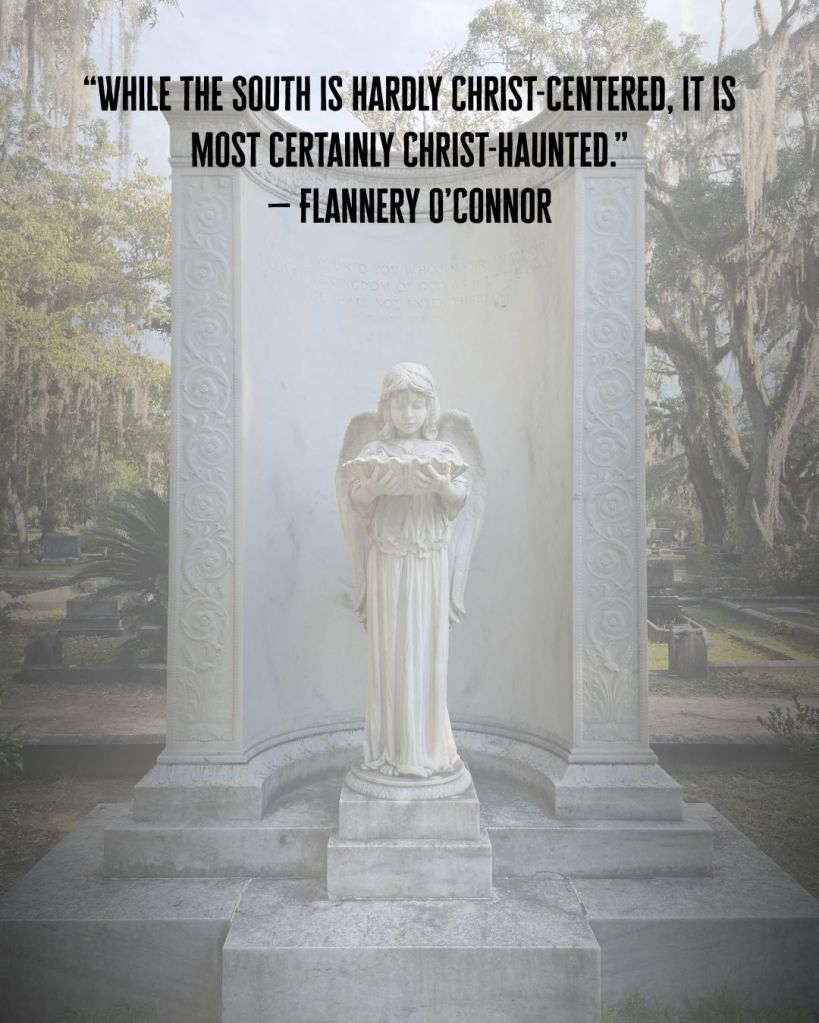
Flannery O’Connor left a lasting mark on Southern literature by writing stories that were bold, strange, and deeply thoughtful. Her Catholic faith and life in the South gave her a singular lens. One that shaped characters who often face tough moral choices and moments of grace in unexpected ways. In Wise Blood and across her short fiction, she used dark humor and unsettling situations to explore belief, identity, and human nature. Her work continues to resonate in literary studies and cultural discourse, offering a lens through which to examine faith, contradiction, and the complexities of Southern life storytelling. Where mystery, manners, and memory take on a different kind of power.

To offer a glimpse into that world, this post includes a review of The Violent Bear It Away, a recording of O’Connor reading A Good Man Is Hard to Find, a critical article on Mystery and Manners, and select previews from her personal letters in The Habit of Being. While not a complete archive, these selections invite readers to experience the breadth of her literary voice. From fiction to reflection, from the grotesque to the graceful.
Before Flannery O’Connor’s Southern Gothic, another voice shaped the region’s cultural memory. One older, oral, and deeply rooted in the land. The Gullah Geechee people, descendants of West Africans brought to the coastal South, preserved language, story, and spiritual tradition through centuries of resilience. Their cadence echoes through the marshes and barrier islands of Georgia and the Carolinas, offering a counterpoint to the written word: an oral tradition rooted in rhythm, resistance, and ancestral knowledge. As we explore O’Connor’s fiction and faith, next we’ll also trace the threads of the Gullah Geechee.


 Exploring Life's Transitions with Words, Wanderlust, and Wisdom
.jpg)
Leave a reply to Ramen_Gold Cancel reply